
Tree Works Applications
For Tree Works involving Tree Preservation Orders and Conservation Areas
If you are considering pruning, reducing or removing a protected tree, the first question is not simply how to complete a Council form. It is what work is appropriate → why it is needed and → what arboricultural evidence supports the proposal.
Urban Forestry Group provides a professional tree works application service beginning with a STRATA™ Tree Risk Assessment of the agreed trees. We then prepare the supporting arboricultural report, photographs, recommendations and digital tree location plan before developing the proposed tree work specification.
You receive the draft information to review and approve before we submit the appropriate Tree Preservation Order application for consent or, where applicable, Conservation Area Section 211 notice.
Based in Chester and providing arboricultural consultancy across Cheshire, Merseyside, Greater Manchester and North Wales.
Not sure whether your tree is protected or which route applies? Tell us what you know about the tree and site when requesting your quotation.
Planning Support
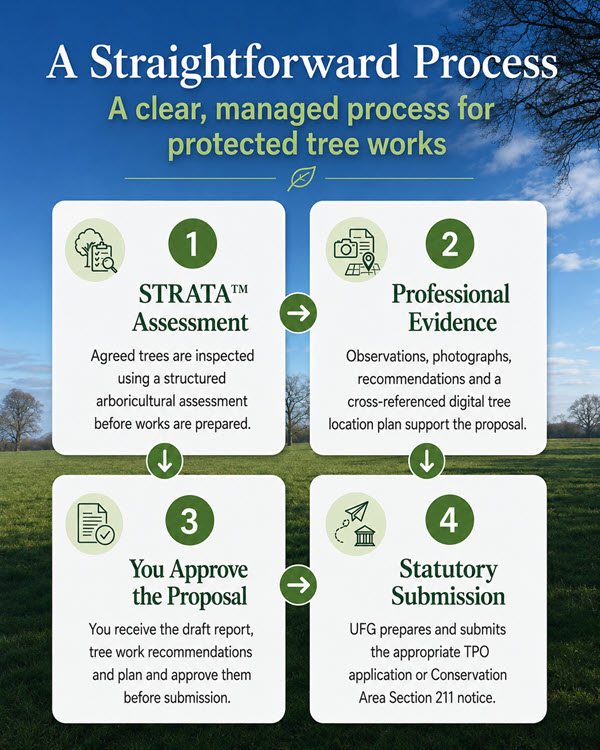
Step 1 – STRATA™ Assessment
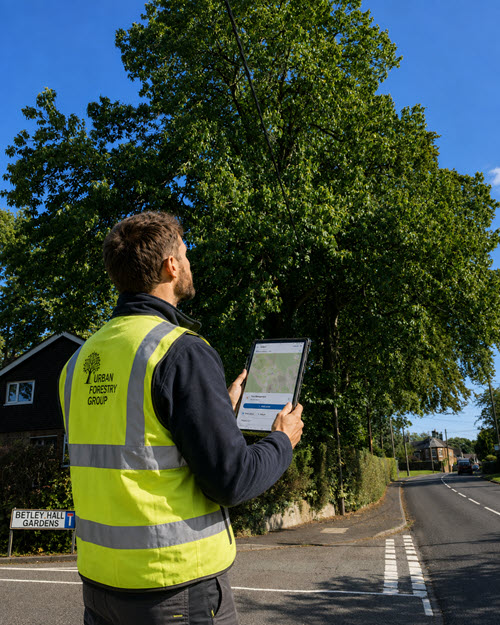
We inspect the agreed trees from ground level using STRATA™ – Structured Tree Risk Assessment and Tracking Analysis, providing a structured arboricultural assessment before the proposed works are prepared.
Step 2 – Professional Evidence
We consider your reason for the work and record relevant observations, photographs and recommendations. The STRATA™ report includes a works priority, recommended action timescale and a cross-referenced digital site plan showing the approximate tree locations.
Step 3 – You Approve the Proposal
You receive the draft STRATA™ report, tree work recommendations and digital site plan to review and approve before anything is submitted. Where included in your quotation, replacement planting proposals can also form part of the package.
Step 4 – Statutory Submission
Following your approval, UFG prepares and submits the appropriate TPO application for consent or Conservation Area Section 211 notice, then forwards the Local Planning Authority acknowledgement and final outcome when received.
Assess the tree → Build the evidence → You approve → We submit
Managing your application
We prepare, submit and manage the routine application process for you.
Applications for tree works can require much more than completing an online form. The trees need to be clearly identified, the proposed work accurately specified and the reasons for the work supported by appropriate arboricultural information.
Urban Forestry Group takes care of this process for you.
Following the STRATA™ tree risk assessment, we prepare the tree work specification, supporting report, photographs and cross-referenced digital site plan. Once you have reviewed and approved the proposed application, Urban Forestry Group acts as your agent and submits the application or notice to the Local Planning Authority on your behalf.
This means local council application correspondence can come directly to us, allowing Urban Forestry Group to deal efficiently with normal queries, keep the supporting information consistent and keep you informed as the application progresses.
If the Local Planning Authority requests substantial new evidence, another inspection or significant revisions outside the agreed service, we will explain what is required and agree any additional work with you before proceeding.
Clear information from the outset
By preparing the tree survey evidence, work specification and supporting reasons together, we aim to provide the Local Planning Authority with a clear easy-to-understand and well-organised application from the outset.
Tree Preservation Order (TPO) or Conservation Area notice?
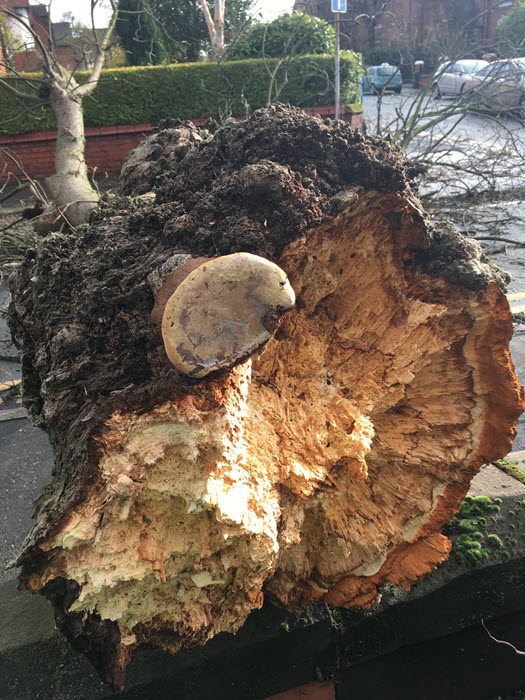
Tree Preservation Order (TPO)
A Tree Preservation Order protects specified trees, groups of trees or woodlands. Unless a statutory exception applies, work to a tree protected by a TPO normally requires an application to the Local Planning Authority for consent.
Where a tree is declining, damaged or displaying significant defects or disorders, the quality of the arboricultural assessment becomes particularly important. The survey should do more than simply recommend tree work: the condition observed should be recorded clearly, the significance of the findings considered and the proposed work supported by appropriate arboricultural reasoning.
Urban Forestry Group uses STRATA™ to provide a structured ground-level assessment of the agreed trees, recording relevant observations, photographs, recommendations and, where applicable, a works priority and recommended action timescale.
This helps provide a clear and traceable basis for deciding the most appropriate way forward. In some circumstances the assessment may also indicate that closer inspection, specialist investigation or a different statutory procedure should be considered before an application is prepared.
Once the appropriate work has been identified, UFG prepares the arboricultural specification, supporting evidence and application on the Client’s behalf.
Conservation Area (Section 211 notice)
Trees within Conservation Areas can be subject to statutory controls even where they are not protected by a Tree Preservation Order.
For qualifying work to a Conservation Area tree that is not already subject to a TPO, the normal procedure is to give the Local Planning Authority six weeks’ notice under Section 211 before carrying out the proposed work.
This is a notice procedure rather than an application for TPO consent. During this period, the Local Planning Authority can consider the proposed work and whether the tree should be protected by a Tree Preservation Order. If a TPO already applies, the TPO application procedure is followed.
Urban Forestry Group uses Mapscape tree-management GIS technology to identify and organise surveyed trees digitally. Trees can be given unique references and plotted on digital mapping, helping the Client and Local Planning Authority relate tree survey information, photographs and proposed works to the correct tree.
This is particularly valuable on sites with multiple trees, including estates, schools, healthcare sites and managed grounds, where digital mapping provides a clear and organised view of the tree population.
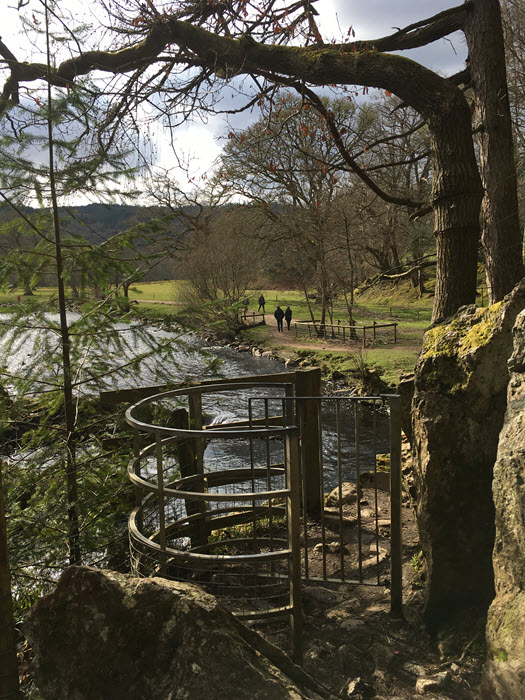
What you receive
Before the application
- STRATA™ Tree Risk Assessment report and digital site plan in PDF format.
- Photographs, observations and arboricultural recommendations.
- Proposed tree work specification and supporting reasons as a Draft.
Following the application
- Copy or confirmation of the submitted TPO application or Conservation Area notice.
- Local Planning Authority acknowledgement and application or notice reference where received.
- The final decision notice, confirmation or other formal outcome received from the authority.

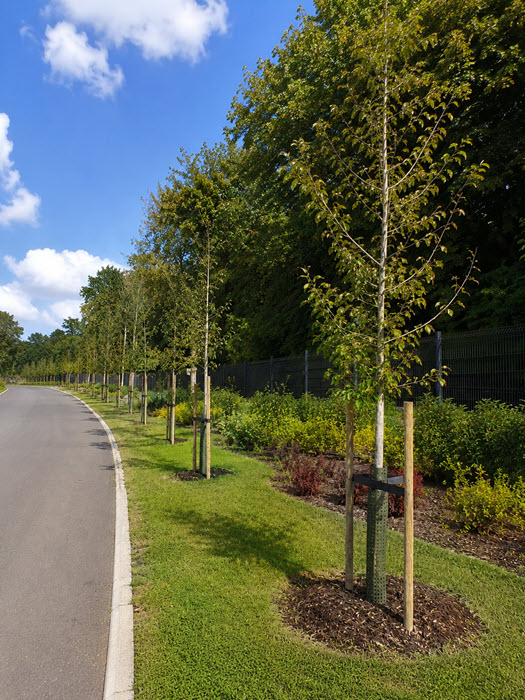
Replacement tree planting
Replacement tree planting, soft-landscape design and tree establishment planning are not automatically included within the standard Tree Works Application service, allowing the quotation to remain proportionate to the work actually required.
If you already know that replacement trees should form part of the proposal, please tell us before submitting your Works Order.
Urban Forestry Group can then provide a revised Scope of Works and quotation incorporating:
- Assessment of site conditions to look at the best options
- Discussion with the land owner as to the options for replacement tree planting
- Create tree planting site plan and spreadsheet report to specify the tree replanting
- Optional report content for calculating the total cost of replacement tree planting, including materials and a 5-year tree establishment plan.
If the Local Planning Authority later asks for replacement planting or additional landscaping information after submission, we can discuss the tree planting requirement with you and provide a separate quotation where appropriate.
Urban Forestry Group can provide cost effective replacement tree planting at any scale of operations from a single tree to a community forest or larger urban forestry programs using Mapscape – tree management software.
Frequently Asked Questions
Answers to common questions about protected trees, applications and what happens next.
Is my tree protected?
If you already have a TPO reference, Conservation Area information or previous Local Planning Authority correspondence, please send it to us.
Urban Forestry Group can also review information reasonably available from the relevant Local Planning Authority when preparing the commission. A formal legal, title or local land-charges search is not included in the standard service unless expressly agreed.
Do I need permission for a protected tree?
Work to a tree protected by a TPO normally requires Local Planning Authority consent unless a statutory exception applies.
Qualifying work to a tree in a Conservation Area that is not already protected by a TPO is normally dealt with through the Section 211 notice procedure.
We will explain the appropriate submission route for the protection identified for your tree.
Can I review the tree work before submission?
Yes. The agreed tree or trees are assessed from ground level using the STRATA™ method before UFG prepares the proposed tree work and supporting arboricultural information.
Will I see the proposed tree work before it is sent to the Council?
Yes. You receive the draft STRATA™ report, proposed tree work recommendations and digital site plan for review.
Urban Forestry Group will not submit the application or notice until your written approval has been received.
How long does a tree works application take?
The UFG quotation will state our estimated timescale for the site visit, preparation of the draft documents and submission following your approval.
The Local Planning Authority process is separate from our delivery time.
For a TPO application, allow approximately up to eight weeks following validation as a general planning guide. A qualifying Conservation Area Section 211 notice normally involves a six-week notice period.
Local Planning Authority timescales and outcomes are outside UFG’s control and individual cases can take longer or require further information.
What if the survey identifies further issues?
STRATA™ is primarily a visual, ground-level assessment. Sometimes the available evidence is not sufficient to reach a reliable conclusion.
Where appropriate, we may recommend closer or aerial inspection, decay detection, specialist diagnosis or other additional evidence before the proposed works are submitted.
Any additional work outside the agreed Scope of Works will be discussed with you before it is undertaken or charged.
What if the Council wants more details?
If you know replacement planting will be required, tell us before submitting the Works Order so that it can be incorporated into a revised quotation and Scope of Works.
If the Local Planning Authority subsequently asks for new technical evidence, replacement planting, revised specifications or other substantive additional work, we will explain the requirement and agree any additional service with you separately.
Can tree work start upon submission?
No. Submission alone does not mean protected tree work can begin.
Work to a TPO tree normally requires consent before it is undertaken unless a statutory exception applies.
For a qualifying Conservation Area tree, the applicable Section 211 notice process must also be followed.
Planning consent or completion of a notice procedure does not itself give permission to enter somebody else’s land, and wildlife or other legal requirements may still apply.
Need help with a protected tree?
Whether you are a homeowner, property owner, estate, school, healthcare organisation, commercial property manager or other organisation responsible for trees, we can provide a clear quotation setting out the trees to be assessed, the work included and the next steps.
Tell us where the tree is, what is concerning you or what work you are considering, together with any protection information you already have.
We can then prepare the appropriate Scope of Works & Quotation for you to review before you decide whether to proceed.
Need help with a protected tree?
Whether you are a homeowner, property owner, estate, school, healthcare organisation, commercial property manager or other organisation responsible for trees, we can provide a clear quotation setting out the trees to be assessed, the work included and the next steps.
Tell us where the tree is, what is concerning you or what work you are considering, together with any protection information you already have.
We can then prepare the appropriate Scope of Works & Quotation for you to review before you decide whether to proceed.